
Why Most Permit Comments Are Preventable (and Where They Come From)
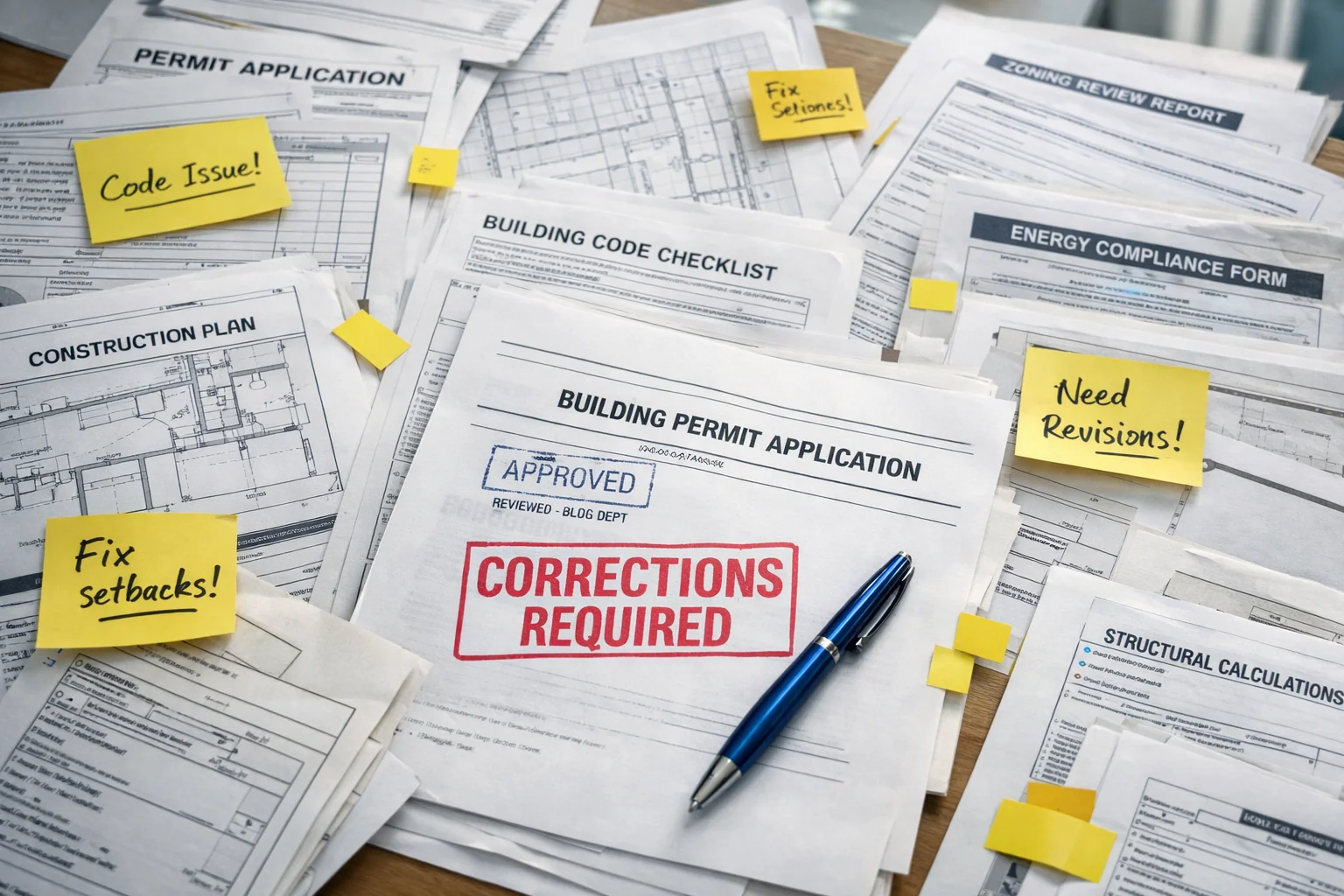
Permit review comments are often treated as an unavoidable part of the design process. Many an architect or engineer may assume that a certain amount of back and forth with the jurisdiction is simply the cost of moving a construction project through approval. When a rejection or comment arrives, it is frequently attributed to subjective interpretation, local ordinance quirks, or differing views during plan review.
In reality, a large share of permit applications get flagged for recurring and predictable issues. These are not typically tied to ambitious design decisions or edge-case building codes and regulations. Instead, they originate from conflicting information, clarity issues, and alignment failures that persist across every project regardless of size. To streamline the permitting process, firms must look beyond individual plan reviewer preferences and examine how architectural drawings are validated before submission.
Permit Comments Rarely Indicate Missing Scope
One of the most common misconceptions is that comments reflect an incomplete permit set. While missing information does occasionally trigger a delay, it is far more common for a reviewer to flag an inconsistency between the drawing, narratives, and compliance assumptions.
For example, a remodeling project may include a checklist and code summary, yet still receive a correction requesting to clarify the occupancy classification or zone. From the perspective of the jurisdiction, the root cause is not that information is missing, but that it is not reconciled. When a permit set is issued without this alignment, the entire process can stall. Resolving these avoidable mistakes upfront is the best way to shorten the timeline and ensure a first-pass approval.
Coordination Gaps Across Sheets and Disciplines
Another major source of review comments is a lack of coordination across discipline. Structural calculations and egress analysis may be reviewed independently from door schedules and wall type diagrams. While each drawing may appear internally correct, conflicting information in construction documents frequently emerges when the permit set is evaluated as a whole.
- Egress paths that appear compliant on a life safety plan but are compromised by door swings or hardware selections shown elsewhere
- Fire resistance ratings correctly identified in wall schedules but inconsistently represented on plans or sections
- Accessibility clearances that meet minimum requirements in isolated details but fail when adjacent elements are considered together
These issues are difficult to catch during a standard architectural QA/QC process because they require deliberate cross referencing across multiple drawing types. Under typical building permit processes, reviewers are often verifying individual conditions rather than actively testing consistency across the entire permit set. When firms help identify these issues before submission, they can avoid permit delay and resubmission cycles.
Code Assumptions That Drift Over Time
Permit comments also frequently stem from code compliance assumptions that are established early in design and carried forward without revalidation. Occupancy classifications, construction types, and egress strategies may be defined during schematic design and remain unchanged in documentation, even as the construction project evolves.
As rooms are repurposed, tenant boundaries shift, or support spaces are added, the original assumptions may no longer apply. The architectural drawings reflect the updated layout, but the code summary and life safety narrative do not. This misalignment is not always obvious internally, particularly on projects that feel familiar or repetitive.
From a reviewer's standpoint, this creates ambiguity. When assumptions and drawings do not clearly align, comments become the formal way clarification is requested. To navigate this successfully, firms should consider permit requirements early and coordinate updates to assumptions as the construction project evolves.
Evidence From Permit Review Research
Research from Fordje Consulting and Studio Archifad found that the majority of permit rejections stem from recurring compliance and coordination errors, not missing scope or fundamentally flawed designs. The most common causes of rejection are documentation inconsistencies and coordination failures rather than fundamentally flawed designs.
Rather than indicating overly strict review, the findings suggest that many comments arise from how documentation is interpreted when evaluated as a unified system. Plan reviewer research demonstrates that when firms expedite the internal review process and maintain clear documentation, they experience fewer delay cycles and higher first-pass approval rates.
Structural Constraints of Pre-Permit Review
The persistence of preventable permit comments points to structural constraints in how the architectural QA/QC process is typically performed. Internal reviews must balance thoroughness with schedule and staffing realities. Reviewers may confirm that requirements are met in isolation without tracing those requirements across all related sheets and discipline to identify potential issues.
These constraints are not a reflection of effort or competence. They are a function of how complex documentation is reviewed within compressed delivery timelines. External reviewers, approaching the permit set without prior familiarity, often surface issues that internal teams did not flag simply because they are viewing the documentation differently. When teams streamline the process through better coordination, they reduce the risk of many delays and costly change orders.
Some firms study these recurring patterns through post-review analysis and external research to better understand where internal reviews tend to break down under scale and complexity. This proactive approach helps teams standardize their review process and expedite the path to approval.
Rethinking the Role of Permit Readiness
Preventable permit comments are best understood not as isolated failures, but as symptoms of misalignment between drawings, assumptions, and documentation clarity. When these elements are evaluated independently, construction documentation gaps persist. When they are evaluated holistically, many common comments can be avoided.
Improving permit outcomes does not require anticipating every possible plan reviewer preference. It requires ensuring that assumptions are current, coordination is compliant, and building codes and regulations are clearly demonstrated across the entire permit set. When a drawing set is ready for permit submission, it demonstrates that the team has reconciled life safety assumptions with final design intent.
The data sources and research referenced in this article are part of a broader collection of permit review, delay cost, and construction compliance research we have compiled from government reports, industry associations, and consulting studies.
Explore all data sources on our Insights pageThe Archidian team builds AI-powered tools to automate building code and life safety reviews for architects and design professionals.
Continue Reading
The Hidden "Price of a Permit"
Why developers pay 50% more for land with preapproved permits, and what it reveals about the true cost of regulatory delay.
What Architects Actually Miss During Final QA/QC Reviews
Why coordination issues persist late in documentation and how review structure shapes what gets caught.