
How Small Construction Firms Can Match the Documentation Reliability of Larger Practices
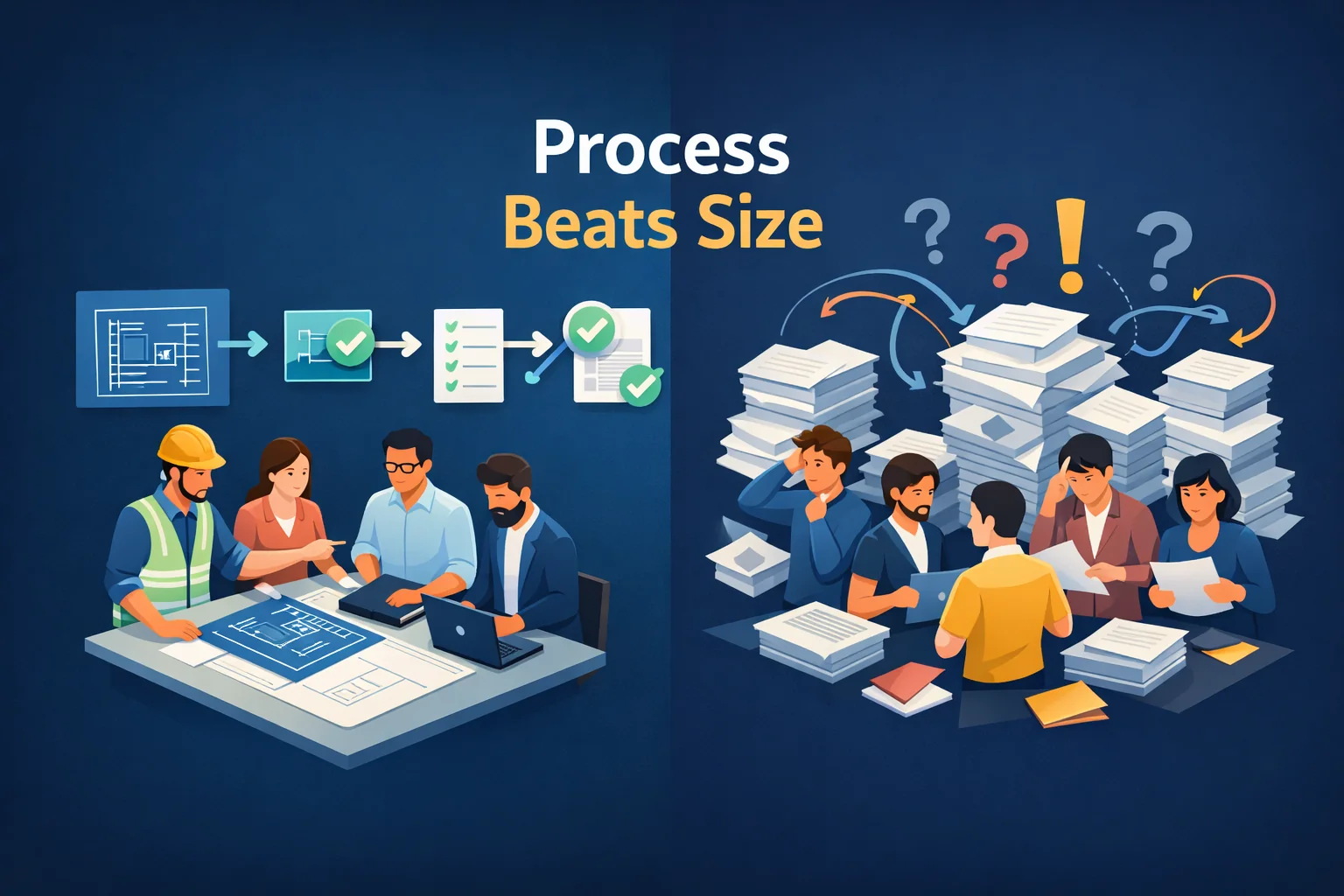
In architectural practice and construction business operations, documentation reliability is often assumed to correlate with firm size. Larger construction companies are associated with dedicated technical staff, internal reviewers, and formalized review layers, while small architecture firms and small construction businesses operate differently, but not with fewer safeguards when processes are intentional. The perception gap exists because scale is easy to measure. Process discipline is not.
In reality, permit outcomes, construction coordination issues, and peer review results show wide variation across construction firms of all sizes. Some small firms consistently deliver clear, coordinated documents, while others struggle regardless of scale. The difference is not headcount. It’s how review responsibilities are defined, applied, and reinforced across the organization. Understanding this distinction is critical for small construction businesses competing in a landscape where documentation quality directly impacts cash flow, change orders, and project margins.
How Growth Changes Review Dynamics
As construction companies scale, review structures naturally evolve. Responsibilities are distributed across teams, specialties, and offices. This specialization improves depth in specific areas, but it also introduces more handoffs and assumptions about where validation occurs. In these environments, review success depends on alignment across the organization. When expectations are not clearly shared, issues persist not because they are overlooked, but because responsibility for resolving them is unclear.
Smaller construction practices have a structural advantage here. Fewer layers mean review paths are more direct. This allows small construction businesses to assign and track review accountability more efficiently, reducing the organizational friction that slows down larger counterparts. Real-time collaboration platforms and document management systems amplify this advantage, enabling distributed teams without losing quality control.
Why Consistency Matters More Than Volume
Documentation reliability is sometimes framed as a function of how many reviews occur. More eyes, more checklists, and more iterations are assumed to reduce risk. The metric that actually matters is consistency of application. Small firms that deliver reliable construction projects use the same review expectations across all construction projects, regardless of size or fee. Assumptions are made explicit, and deviations are addressed decisively.
Shifting review standards from project to project wastes effort. You end up with inconsistent results no matter how hard you try. Consistency is the source of competitive advantage, and it compounds over time.
Each project reinforces the same standards, embedding quality into your firm’s DNA rather than treating it as a variable. For small businesses, this approach directly improves cash flow management. Fewer coordination gaps mean fewer change orders, more predictable timelines, and better project margins.
Ownership Clarifies Responsibility
One of the defining characteristics of effective construction project management is clear ownership. When responsibility for validation is explicit, issues are resolved decisively rather than deferred. In smaller construction practices, review ownership is concentrated by structure. A defined set of people are accountable for ensuring coordination, which eliminates ambiguity about who resolves conflicts.
Clear ownership is not tied to firm size. It results from deliberate role definition and intentional organizational design. When every team member knows exactly what they are responsible for reviewing and who holds final accountability, review discipline becomes automatic rather than effortful.
How Experience Becomes Repeatable Process
Repeatable review methods allow small construction firms to convert experience into institutional knowledge that persists beyond individual employees. When similar coordination issues surface across construction projects, they are addressed systematically rather than rediscovered repeatedly. Without repeatability, review depends on individual memory and familiarity. When workloads shift or skilled professionals change roles, reliability deteriorates.
Pattern-based analysis is increasingly common in construction management practice. AI-driven QA/QC tools and document management systems help teams apply these insights efficiently by automating data entry and flagging recurring issues before they become problems. ERP and integrated project management systems tie documentation quality directly to budget tracking and real-time cost tracking, showing exactly how coordination gaps affect your bottom line.
Evidence From Peer Review Research
Peer review research reinforces the importance of structured review approaches. Studies examining QA and coordination outcomes across a wide range of projects demonstrate that disciplined review methodologies correlate with fewer downstream construction issues, independent of firm size. Projects with fewer but more structured review touchpoints outperform those with multiple informal reviews.
The profitability impact is substantial. Unresolved coordination conflicts create cascading effects like change orders multiplying, timelines extending, cash flow becoming unpredictable, and project margins eroding. By investing in structured review upfront, smaller construction companies avoid these downstream costs entirely. One coordinated project with stable margins outperforms three chaotic ones, regardless of total revenue.
Why Small Firms Have Structural Flexibility
Smaller construction practices have structural flexibility that larger firms cannot replicate. When gaps are identified, processes can be refined and applied quickly across the organization without navigating approval hierarchies. These incremental adjustments compound over time. Review processes evolve in response to real project feedback, strengthening reliability without requiring additional staffing or formal departments.
When larger firms must schedule meetings to adjust processes, small construction businesses implement changes immediately. This responsiveness allows you to address emerging coordination patterns before they become systemic problems. Over a multi-year period, this advantage translates directly to fewer rework cycles, faster project closeouts, and more predictable cash flow.
Building a Documentation Quality Culture
Documentation reliability becomes a cultural asset when small firms intentionally embed review expectations into everyday practice. This doesn’t require expensive systems or additional headcount. It requires clarity about what matters and consistency in how those standards are applied. Start by defining the specific coordination gaps that most commonly appear on your projects. Once identified, build simple review checkpoints into your workflow that specifically address these issues.
Reinforce these checkpoints through team conversations, not punitive oversight. When team members understand why a specific review step exists and what downstream problems it prevents, compliance becomes intrinsic rather than forced. This approach scales efficiently across small teams because it builds shared understanding rather than relying on hierarchical enforcement.
Practical Steps for Small Construction Firms
- Implement a standardized review matrix that applies consistently across all projects, specifying who reviews what, when reviews occur, and what resolution looks like when issues are identified.
- Establish a monthly or quarterly review of documentation outcomes across completed projects. Spend 30 minutes examining coordination issues that emerged during construction.
- Invest in AI-driven QA/QC tools that automate routine checking and flag common coordination patterns automatically, multiplying your review capacity without adding staff.
- Connect your documentation quality directly to project profitability metrics. Track how coordination gaps correlate with change orders, schedule delays, and cost overruns.
- Use integrated project management systems and ERP platforms that tie documentation quality to budget tracking, showing exactly where coordination failures become financial problems.
Why Small Firms Actually Win on Documentation Reliability
Small construction businesses that prioritize structured review processes deliver documentation quality that matches or exceeds larger counterparts. This competitive advantage emerges not from greater resources, but from greater clarity about what matters and greater agility in applying those standards consistently. The firms that excel understand that documentation reliability is not a cost center. It’s a profit driver.
Your firm size is not a limitation. It’s an asset. Use it to build review discipline faster than larger competitors can navigate their approval processes. Use it to adapt when project conditions require new thinking. Use it to maintain consistency that larger firms struggle to enforce across dispersed teams.
Start with one project. Apply a clear, consistent review methodology. Track the coordination issues that surface and the financial impact they create. Then apply what you learned to the next project. Small construction companies that follow this pattern consistently outperform larger counterparts on documentation quality, schedule predictability, and project profitability. Your competitive advantage is not in matching their headcount. It’s in matching their discipline while moving faster.
The Archidian team builds AI-powered tools to automate building code and life safety reviews for architects and design professionals.
Continue Reading
The Hidden "Price of a Permit"
Why developers pay 50% more for land with preapproved permits, and what it reveals about the true cost of regulatory delay.
The Hidden Cost of RFI Cycles: How Drawing Coordination Shapes Project Outcomes
Why unresolved documentation questions resurface during construction and quietly reshape schedules and budgets.